Services
Home & Space Disinfection
We fight bacteria, viruses and mould with approved, safe products — targeted at high-contact surfaces. Disinfection certificate on request.
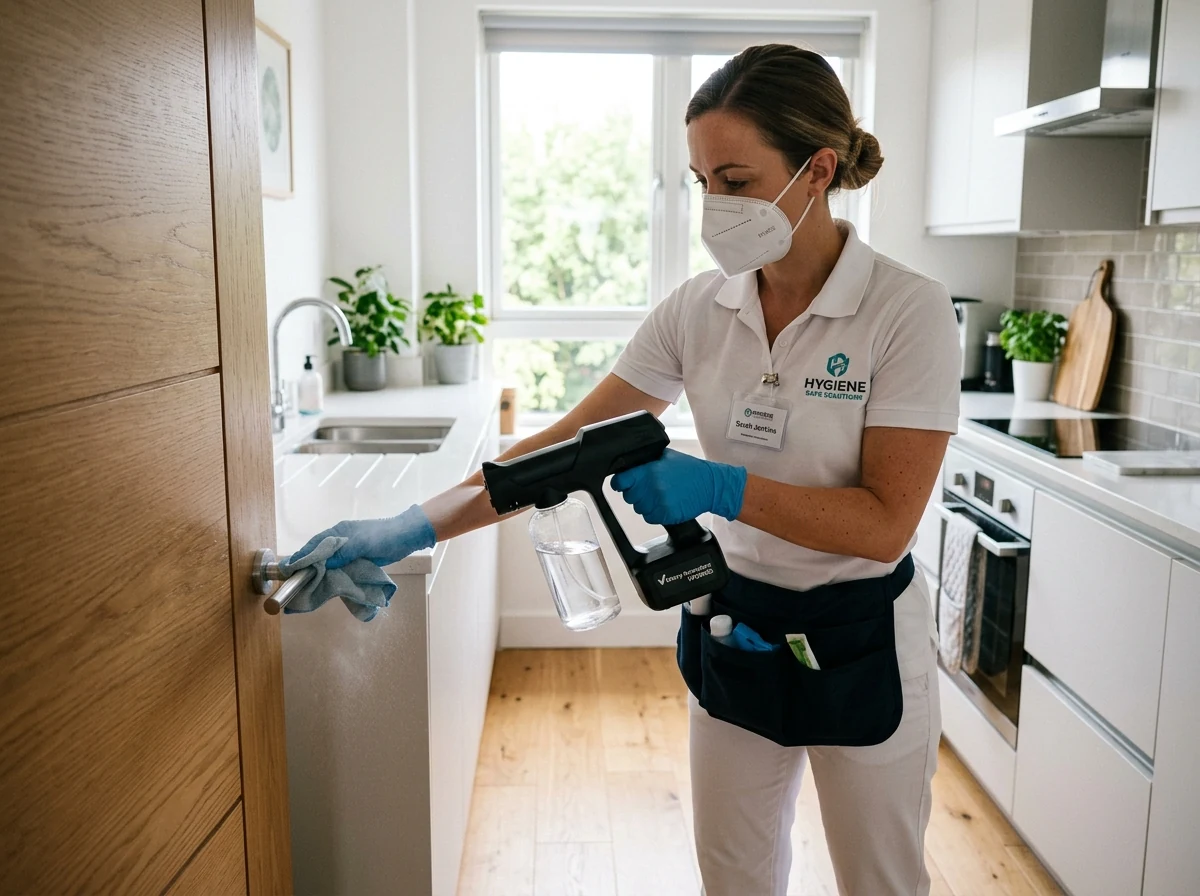
What is home disinfection and why is it necessary?
Professional home disinfection is the targeted health procedure for neutralising dangerous pathogenic microorganisms — bacteria, viruses and fungi — on surfaces and in the air. Using biocidal products approved by the Greek medicines authority (EOF), it drastically reduces the microbial load, ensuring certified hygiene.
Key highlights
- Effective action: Neutralises 99.9% of pathogenic viruses, bacteria, and fungi.
- Affordable pricing: Disinfecting a typical flat (up to 80m²) starts from €25 to €40.
- Fast application: The process takes only 20 to 30 minutes per apartment.
- Advanced methods: Uses ULV cold fogging and targeted surface spraying.
- Certified safety: Uses EOF-approved biocides that are safe for children and pets after drying.
Cleaning vs disinfection vs sterilisation: the basic differences
The distinction between cleaning, disinfection and sterilisation is fundamental to household hygiene. Mechanical cleaning removes organic soiling, since without a pre-wash biocidal products lose much of their potency. Disinfection neutralises 99.9% of viruses, while medical sterilisation completely destroys resistant microbial spores.
| Level | Target and effectiveness | Field of application |
|---|---|---|
| Cleaning | Removal of surface soiling | Everyday household use |
| Disinfection | Neutralisation of 99.9% of pathogenic microbes | Homes and businesses |
| Sterilisation | 100% elimination of microorganisms | Operating theatres and laboratories |
Understanding these differences prevents common mistakes in everyday home upkeep. Applying disinfectant directly onto dusty or greasy surfaces creates a protective biofilm for the microbes, preventing the active ingredient from acting effectively. Conversely, the combination of a meticulous pre-wash with a neutral cleaner followed by the application of a certified biocide ensures the necessary contact time of 5 to 15 minutes, achieving full microbicidal action.
Disinfection and pest control: when should they be combined?
Disinfection and pest control perform different health functions. Insect control and rodenticide exterminate visible parasites, such as cockroaches or rodents, which act as dangerous carriers of bacteria. Disinfection, by contrast, neutralises the invisible microbes these parasites spread on surfaces, preventing infections.
In cases of heavy infestation, a combined application in 2 consecutive stages is required: first pest control with products approved by the Ministry of Rural Development and Food, then disinfection with certified biocides from EOF. A single intervention lasting 20 to 40 minutes per flat ensures full protection, saving cost.
In practice, insects such as cockroaches and bedbugs carry pathogenic bacteria such as Salmonella, Escherichia coli and staphylococcus on their legs and in their droppings, contaminating kitchen counters and stored food. Simply exterminating the insects leaves behind this invisible microbial load, which can cause food poisoning or allergic reactions. Therefore, performing pest control and disinfection in parallel in a single session simultaneously eliminates both the cause and the consequences of the contamination.
Costs and prices for home disinfection (2026)
Prices for home disinfection in 2026 start from €25, offering full health coverage and an official disinfection certificate with no hidden price. Cost factors such as the square metres determine whether you are looking for an economical home disinfection or a specialised intervention with a guaranteed result by a certified agronomist. An indicative disinfection price list follows, with a detailed cost of application.
Disinfection price list by property type and square metres
The detailed list below captures the average market prices for 2026, categorised by the surface area in square metres and the type of property. The price for disinfecting a flat starts from €25 for surfaces up to 80 m², while in homes of 80–150 m² it ranges at €35–60. Combined offers of disinfection with pest control ensure a significant discount on the total cost.
| Property type | Size | Duration | Price |
|---|---|---|---|
| Flat | up to 80 m² | 15–20 minutes | €25–40 |
| Flat / duplex | 80–150 m² | 20–30 minutes | €35–60 |
| Maisonette / detached house | 150–250 m² | 35–50 minutes | €55–90 |
| Shared block areas | Depending on floors | 20–40 minutes | from €25 |
| Commercial space / office | up to 100 m² | 25–35 minutes | €50–70 |
The final price is influenced by factors such as the degree of microbial or parasitic burden, the choice of application technology (e.g. ULV fogging versus classic spraying) and the need to combine it with biological cleaning of fabric surfaces. Many companies offer annual maintenance contracts with 2 to 4 scheduled visits, reducing the unit cost per application by up to 30% compared with one-off emergency call-outs.
Professional methods and equipment for home disinfection
Modern home disinfection methods are applied by a specialised disinfection crew with state-of-the-art professional equipment. The process is based on EOF-approved biocides and the international hygiene standards EN 14476 and ISO 9001. The updated 2026 home disinfection protocols guarantee full microbicidal action.
Fogging (ULV cold fogging) and surface spraying
Cold-fogging technology is a top method for whole-house fogging. Special ULV fogging produces airborne micro-droplets 5–50 μm in diameter, covering every hard-to-reach spot without leaving moisture residue on electrical appliances. ULV cold-fog disinfection destroys viruses, bacteria and fungal spores on fabrics and in air ducts. At the same time, targeted low-pressure surface spraying applies an active quaternary-ammonium disinfectant solution to switches and handles. The protocol provides full room disinfection with a mandatory 20-minute evacuation and 30–45 minutes of natural ventilation before residents safely re-enter.
The basic superiority of the ULV method over the traditional hand sprayer lies in the ability of the micro-droplets to remain airborne for several minutes, following the natural air currents of the space. This allows the disinfectant solution to penetrate crevices, behind heavy furniture, into plasterboard recesses and inside the air-conditioning units (split A/C). In addition, because the volume of liquid is dispersed in an extremely fine form, no wetting or damage is caused to sensitive surfaces such as wooden parquet, bookcases or electronic devices.
Bait-gel application and targeted interventions
Targeted disinfection with gel for cockroaches is a highly effective method. The professional gel for the German kitchen cockroach (Blattella germanica) causes secondary poisoning (a cascade effect), wiping out the entire nest in 5–14 days. Applying cockroach bait gel involves placing micro-drops on hinges, behind fridges and appliance motors, without emptying shelves. The approved insecticidal products are odourless, low in toxicity and retain their potency for 3 to 6 months. Modern gel pest control ensures high economic efficiency, offering definitive cockroach nest extermination without any burden on the indoor home environment.
The targeted use of bait gel is based on the natural behaviour of the insects (coprophagy and necrophagy), allowing a single drop to eliminate dozens of insects in their nest. Since the product is placed in spots inaccessible to children and pets — such as the inner hinges of cabinets and the warm spots behind the dishwasher — no preparation to evacuate the space or remove utensils is required. This method is the gold standard for kitchens and food-preparation areas, where wholesale chemical spraying would be impractical or undesirable.
Ecological disinfection, ozone (O3) and biological cleaning
Modern ecological home disinfection provides hypoallergenic protection without chemical residue. A professional ozone (O3) generator instantly oxidises fungi, viruses and odours, breaking down into pure oxygen within 60 minutes. At the same time, the specialised biological cleaning of sofas and mattresses with the deep extraction method eliminates dust mites (Dermatophagoides) and their droppings. Targeted disinfection against mites and allergies uses ecological biodegradable products, making it an ideal solution for infants and asthma patients. In the Greek market in 2026, chemical-free ecological pest control and disinfection with dry superheated steam (at temperatures up to 180°C) are growing rapidly, offering the immediate deactivation of pathogenic microorganisms.
Dry-steam technology is particularly effective in combating bedbugs, insect eggs and mould spores on mattresses, sofas and fabric headboards, where liquid chemical solutions are slow to dry. Combined with ozone cleaning, persistent odours of smoke, damp or pets are fully neutralised, radically renewing the quality of the indoor air. These ecological interventions are absolutely suitable for people with multiple chemical sensitivities, allergic rhinitis or skin conditions.
When is disinfection necessary and how often should it be done?
The right home disinfection frequency ensures active prevention of infections. When disinfection is needed is determined by the pathogenic microorganisms burdening the space. Preventive home disinfection is carried out with EOF-approved products.
Recommended frequency for homes and households with pets
The presence of pets in a flat significantly changes the health requirements and the frequency of disinfection applications. For typical homes, an application 1 to 2 times a year is recommended, but the frequency is set at every 3 to 6 months when animals live there. Targeted home disinfection with a dog present eliminates dust mites and microbes. At the same time, disinfection for pet fleas and pest control for ticks in a flat combat eggs and larvae in carpets. Only EOF-approved biocides and disinfectants safe for cats are applied, entirely harmless once dry.
The ideal annual schedule includes two main applications: one in spring (March–May), when the rising temperature activates the biological cycles of insects, and one in autumn (September–November), when the parasites seek warm shelter inside homes. In households with dogs or cats that have access to outdoor gardens and parks, periodic preventive disinfection every quarter prevents fleas from settling into the carpets and drastically reduces the bacterial load carried in on the animals’ paws.
Emergency cases: after illness, a move, or in Airbnb properties
Certain conditions call for immediate, specialised intervention, going beyond the property’s regular annual maintenance schedule. After a resident recovers from an acute viral or bacterial infection (such as seasonal flu or gastroenteritis), fogging eliminates the airborne droplets and disinfects critical contact points. This procedure nullifies the risk of in-house spread, protecting the elderly and vulnerable groups.
When moving into a new home, disinfection before the furniture and personal belongings are placed clears the space of the microbial footprint of the previous residents and any lurking parasites in cabinets and skirting boards. At the same time, in short-term rental properties (Airbnb), strict hygiene protocols between successive arrivals strengthen guests’ trust, prevent negative reviews and ensure full compliance with international hospitality standards.
Safety instructions: preparation and measures before & after the application
Strict preparation of the home for disinfection and the application of precautionary measures ensure absolute safety with EOF-approved products. The certified crew always wears special personal protective equipment (PPE), while the appropriate ventilation time is a basic precondition for residents’ safe re-entry.
For the proper preparation of a flat for disinfection, the careful putting-away of food, cooking utensils and personal hygiene items in airtight containers or the fridge is required. Before the application, a vacuum cleaning of corners and skirting boards is carried out, removing dust and organic residue. Additionally, heavy furniture is moved 30–50 centimetres away from the walls, ensuring unobstructed access to the perimeter of the space. At the same time, plants and electronic devices are covered with plastic sheeting, while for home aquariums the lid is sealed and the oxygen supply cut off for at least 4 consecutive hours.
Safety for children, infants and pets
Safety for children, infants and pets is fully ensured in 2026 through certified products. Modern third-generation pyrethroid formulations and quaternary-ammonium biocides are used, distinguished by their low residual toxicity towards warm-blooded organisms. The active ingredients bind to the surfaces without evaporating into the air after drying, eliminating any risk of inhalation.
For infants who crawl on the floor and pets that have a habit of licking surfaces, staying out of the home for 1 to 2 hours is recommended as a precaution, until the moisture of the spray has fully evaporated. After re-entry, it is recommended to avoid mopping the perimeter of the floors (skirting areas) for at least 48 to 72 hours, so the residual action of the product is not removed, while the central surfaces remain absolutely safe for everyday use.
How to choose a certified disinfection company
Choosing a disinfection company requires checking state licences and technical competence for the residents’ safety in 2026. A certified disinfection company has scientific support from an agronomist or chemist, applies the European ISO and EN 16636 standards and issues a legal home disinfection certificate, ensuring transparent prices and positive reviews.
Ministry certification, agronomist licence and EOF-approved products
The institutional framework in Greece explicitly stipulates that every professional application requires a special state licence for insect and rodent control from the Ministry of Rural Development and Food. Scientific supervision is mandatorily exercised by a responsible scientist, such as a graduate agronomist or chemist, who guarantees the correct dosage and prevents the use of dangerous agrochemicals indoors.
At the same time, biocidal products for household use and surface disinfectants mandatorily carry a marketing authorisation number from the Greek medicines authority (EOF). Disinfections supervised by an agronomist ensure that the approved products are odourless, low in toxicity and fully recorded in the ministry’s electronic register.
Disinfection certificate and a guarantee of results
Upon completion of the work, an official home disinfection certificate is mandatorily issued, bearing the signature and stamp of the responsible agronomist. The document states the active products, the approvals from the ministry and EOF, as well as the corresponding MSDS safety data sheets. This disinfection certificate is legally required also for Airbnb properties.
In addition, reliable crews provide a written disinfection and pest-control guarantee. If a residual insect population is detected within the coverage period, an immediate free repeat application is carried out, ensuring a definitive result according to official hygiene standards for every home at no extra charge.
Booking an appointment and immediate home service
Scheduling a disinfection appointment is done immediately via online booking or with a single phone call. Mobile crews cover Thessaloniki and Halkidiki, offering a cost estimate with no hidden charges.
In cases of heavy parasitic infestation, an emergency home pest-control service is provided with same-day intervention within 2 to 4 hours. The rapid response prevents the spread of pathogenic microorganisms to the other rooms of the home.
Frequently asked questions
How much does disinfecting a typical flat cost?
The cost of disinfecting a typical flat usually ranges from €25 to €50, depending on the square metres and the application method. For the shared areas of an apartment block, the price also starts from €25, while for commercial spaces it stands between €50 and €70.
How long does the disinfection process take?
The disinfection process in an average flat lasts on average 20 to 30 minutes. After the spraying or fogging is completed, good ventilation of the space is required for at least 30 minutes before residents enter normally.
Is disinfection safe for children, infants and pets?
The application is absolutely safe for children, infants and pets, as certified products approved by the ministry and EOF are used. However, the preventive absence of vulnerable groups and animals for 1 to 2 hours is recommended, until the surfaces have fully dried.
What is the difference between disinfection and pest control?
The basic difference between the two services lies in the target: disinfection neutralises viruses, bacteria and pathogenic fungi, while pest control combats insects such as German cockroaches, bedbugs, fleas and ants.
How often should home disinfection be done?
As a general rule, home disinfection is recommended 1 to 2 times a year, ideally in spring and autumn. In homes with pets the frequency is set at every 3 to 6 months, while in Airbnb properties the application is advisable after every guest departure or immediately after an incident of illness.