Services
Recurring Cleaning Subscription
Weekly or fortnightly visits from the same team, at your fixed time slot. Your home stays cared for all the time — and you get your hours back.
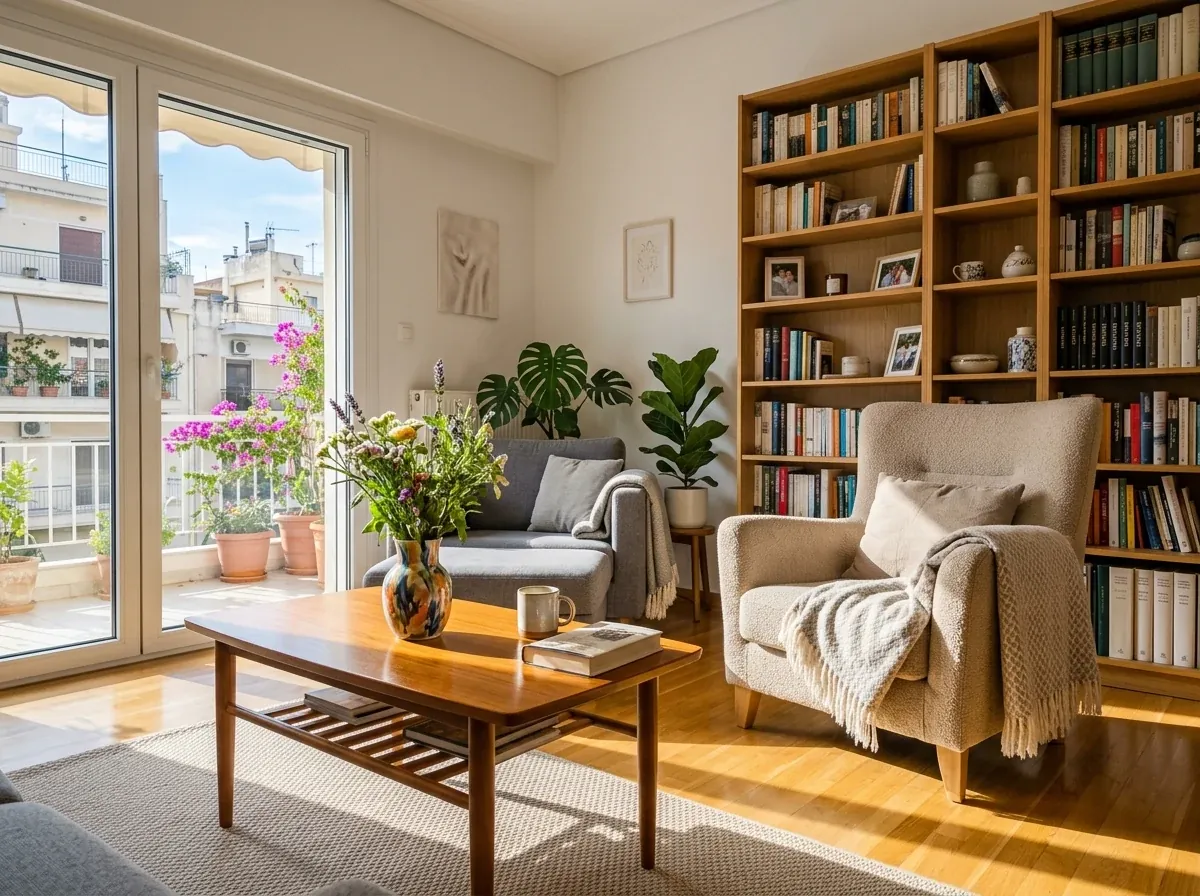
What is regular house cleaning and why is it necessary?
Regular house cleaning is a planned system of home care that guarantees high space hygiene and excellent indoor air quality. It is a recurring maintenance procedure that aims to remove everyday grime, dust and microorganisms before they accumulate and cause permanent damage to household surfaces.
In modern urban centres, the burden from atmospheric pollution, airborne microparticles and pollen is particularly high. Regular cleaning acts as a protective shield, preventing the chemical bonding of grime with the sensitive materials of the house and keeping the living environment clean and functional.
The essential difference between regular and general cleaning lies in the frequency and depth of the intervention. Regular home cleaning maintenance covers open surfaces, disinfection of sanitary fixtures and floors, requiring 3–4 hours for an 80–100 m² home at an average cost of €40–€60 (€8–12/hour) in Greece in 2026. In contrast, deep cleaning lasts 6–8 hours, costs €150–€250 and is performed 2–4 times a year using steam cleaners on hard-to-reach spots.
| Criterion | Regular Cleaning | General Cleaning |
|---|---|---|
| Frequency | 1–2 times weekly | 2–4 times a year |
| Scope of work | Counters, floors, sanitary fixtures | Appliance interiors, frames, salts |
| Average duration | 3–4 hours (80–100 m²) | 6–8 hours |
| Cost (2026) | €40–€60 (€8–12/hour) | €150–€250 per visit |
The steady periodicity of basic care prevents the formation of salt deposits, hardened grease and stubborn mould. In this way, the need for aggressive chemical cleaners during the seasonal deep cleans is drastically reduced, protecting both the health of the occupants and the longevity of the furniture and finishes.
Key highlights
- Maintenance of excellent hygiene and indoor air quality.
- Removal of dust, everyday grime, and microorganisms.
- Prevention of permanent damage to surfaces and furniture.
- Reduction in the need for harsh chemical cleaners.
- Saving personal time and energy.
Benefits for health, psychology and pest prevention
Consistently maintaining cleanliness in the home is not merely an aesthetic matter, but a direct pillar of protection for physical and mental health. In Greece’s humid climate, weekly cleaning neutralises dust mites, significantly reducing indoor allergens and preventing respiratory crises.
Removing pathogenic microorganisms from frequently touched points, such as light switches, door handles and remote controls, halts the spread of seasonal viruses and bacteria. In addition, regular ventilation and the disinfection of damp rooms restrict the spores of the Aspergillus and Cladosporium fungi, which are linked to chronic rhinitis and allergic asthma.
At the same time, systematic disinfection deprives parasites such as Blattella germanica and Periplaneta americana of food, acting as preventive pest control. Moreover, household order lowers cortisol, offering mental wellbeing and relaxation. A clean and tidy space boosts productivity when working from home and ensures better quality sleep at night.
Detailed task checklist per room of the house
A complete house cleaning checklist distributes the tasks per room, applying the top-to-bottom cleaning method. This structured hygiene protocol standardises the steps of regular house cleaning, ensuring excellent disinfection and maintenance on every surface of the living space.
Applying the international colour-coding system to microfibre cloths is an essential element of this process. By using a different cloth colour for the toilet, the basin, the kitchen and the general spaces, the risk of cross-contamination is eliminated and absolute microbiological safety is guaranteed.
At the same time, the rule of alternating dry and wet work is strictly observed. First the dry dusting and vacuum cleaning is completed, so that no traces of mud are created during the wet mopping or the wiping of surfaces with disinfectant solutions.
Living room, bedrooms & hallways: dusting, sweeping & mopping
In the main living spaces, such as the living room, bedrooms and hallways, regular cleaning focuses on eliminating dust and properly caring for the floors. The process starts with electrostatic microfibre cloths for dusting furniture and the air conditioner (A/C), removing particles from light fixtures and shelves with pH-neutral cleaners.
Next, professional vacuums with HEPA H13 filters absorb 99.95% of the allergens from carpets and surfaces. This is followed by meticulous mopping of the floors with a flat microfibre mop, strictly avoiding acidic solutions on sensitive Greek marble, granite and laminate for maximum long-term protection.
Special attention is given to cleaning electronic devices, where dust is removed with special antistatic cloths without adding liquids that could cause a short circuit. The skirting boards, the inner window frames and the mirrors are systematically cleaned to eliminate fingerprints and smudges, lending the space brightness and uniformity.
In the bedrooms, the process includes shaking out and airing the bed linen, as well as vacuuming dust from the surface of the mattresses. Nightstands and headboards are disinfected with gentle formulations, ensuring an absolutely hygienic resting environment.
Kitchen: cleaning surfaces, counters and appliances
In the kitchen, regular cleaning targets the immediate neutralisation of greasy substances, bacteria and food residue. The process starts with the careful washing and degreasing of the cooking surfaces, such as ceramic or induction hobs, using non-abrasive sponges and ecological degreasers that do not scratch the glass.
The worktops are thoroughly cleaned and disinfected according to their material of construction, whether quartz, granite, marble or laminate. The sink and tap are scrubbed to remove water spots and soap residue, while the drain is disinfected to prevent unpleasant odours.
The external surfaces of the large appliances, including the fridge, the oven and the dishwasher, are cleaned with special microfibre cloths for inox or painted surfaces, removing fingerprints and greasy marks. Inside, the microwave oven is cleaned with steam and a mild solution, ensuring safe conditions for preparing meals.
Kitchen care is completed with the washing and antibacterial disinfection of the rubbish bin, both inside and out. The floor is carefully swept under the cabinet recesses and mopped with a disinfectant solution that dissolves grease without leaving slippery residue.
How much does regular house cleaning cost in Greece (2026)?
The cost of regular house cleaning in the Greek market is based on the hourly charge and the area of the space. In 2026, cleaning prices and the cleaner’s hourly rate shape affordable monthly maintenance packages.
The basic factors shaping the final price include the total square metres, the frequency of visits, the number of bathrooms, the presence of pets and whether the detergents are provided by the customer or the crew. Transparency in charges and the issuing of legal receipts are now basic selection criteria for Greek households.
Hourly charges vs monthly maintenance packages
The choice between an hourly charge and a monthly maintenance package is determined by the frequency of your needs and the available budget. In the Greek market, the standalone hourly charge of a cleaning crew ranges from €10 to €15 per hour. In contrast, a monthly house cleaning package of 4 visits costs €120–€184, reducing the hourly rate to €10–€11.50 with a replacement guarantee, public liability and professional detergents.
| Service | Frequency | Cost | Coverage |
|---|---|---|---|
| Hourly charge | Standalone | €10–€15/hour | Basic cleaning |
| Monthly package | 4 visits | €120–€184/month | Materials, insurance |
Choosing a monthly subscription offers significant annual savings that can reach 20–25% compared to sporadic calls to cleaning crews. At the same time, steady maintenance contracts guarantee priority in scheduling appointments during periods of high demand, such as the Christmas and Easter holidays.
In addition, subscription packages usually include the free provision of certified ecological cleaners and professional equipment. This relieves the owner of the additional monthly cost of buying consumables and cleaning tools, making the family budget absolutely predictable.
Example cost & time for a 70–100 m² apartment
For a typical Greek apartment of 70 to 100 square metres with two bedrooms, a living room, kitchen and one bathroom, the required time for regular cleaning is estimated at 3.5 to 4 hours per visit. This time is distributed evenly: about 50 minutes for the kitchen, 45 minutes for the bathroom, 45 minutes for the bedrooms and 60–70 minutes for the living room, hallways and balconies.
On a weekly maintenance schedule (4 visits a month), the average monthly cost ranges between €150 and €180. If the household chooses fortnightly maintenance (2 visits a month), the monthly cost comes to €90 to €110, although each visit may last slightly longer due to the greater concentration of dust.
In cases where pets are hosted in the home or large families with small children live there, the time can increase by 30–45 minutes for the careful removal of hair from fabrics and carpets. This additional cost remains marginal, ranging around €5–€10 per visit.
In the long term, this investment protects the owner’s property. Proper maintenance of wooden floors, marble and sanitary fixtures prevents irreparable damage, sparing the household from costly renovation or polishing work.
Freelance cleaner vs professional cleaning company
In the Greek cleaning services market in 2026, the dilemma between a freelance cleaner and a professional company remains decisive for every household. The choice depends on the prices per hour, the legal coverage, the safety and the reliability of the maintenance services provided.
In recent years there has been a clear shift by consumers towards organised cleaning companies. The need to adhere to strict health protocols, the insurance coverage of the workers and the possibility of electronic payments have established professional crews as the dominant choice over traditional informal employment.
Freelance household helpers: advantages, disadvantages and risks
Choosing a freelance household helper remains popular due to the lower initial cost and the personalised relationship of trust. Charges usually range from €8 to €12 per hour, however the employer must mandatorily cover the Ergosemo labour voucher with EFKA social insurance to avoid fines.
A significant disadvantage is the complete absence of public liability insurance for any material damage to sensitive floors or appliances. In addition, the customer bears the cost of buying cleaning consumables and equipment, while in case of illness or unforeseen absence no guarantee of immediate staff replacement is provided.
Non-compliance with labour legislation and uninsured work entail serious legal risks and fines from the Labour Inspectorate (SEPE). At the same time, freelancers rarely have specialised training in the use of modern chemical formulations, which increases the likelihood of destroying expensive surfaces with the wrong detergents.
Finally, the hidden cost of supplying brooms, mops and cleaning fluids burdens the family budget with an extra €25–€40 monthly. Thus, the final financial difference compared to a professional company is often wiped out.
Specialised company: public liability, invoicing & replacement guarantee
Working with a specialised cleaning company guarantees full legal coverage, professionalism and absolute peace of mind for the owner. Certified companies hold public liability insurance policies, protecting your space from accidental mishaps or breakages — ask for this to be confirmed in writing.
All staff are selected on the basis of strict criteria and are continuously trained in handling modern equipment and specialised materials. In case of the cleaner’s illness or leave, the company undertakes her immediate replacement with another trained member of the team, without the home’s weekly schedule being disrupted.
The financial relationship is governed by absolute transparency, with the issuing of legal invoices or service receipts that include 24% VAT. These receipts can be used for tax deductions by professionals based at home, while offering complete legality.
In addition, the crews bring their own high-power industrial equipment and certified detergents, ensuring a superior level of cleanliness that is impossible to achieve with common household tools.
Professional equipment and ecological cleaning materials
Modern professional cleaning equipment and certified cleaners guarantee deep hygiene in the home. The combination of high-performance machines with ecological detergents protects sensitive surfaces and the indoor atmosphere, achieving effective cleaning with steam and disinfection.
The use of advanced cleaning technologies reduces the need for aggressive chemicals, protecting the health of the occupants. The modern trend in home cleanliness combines mechanical power with green chemistry, creating a safe environment free of toxic residue.
Certified biodegradable detergents with safety data sheets (MSDS)
The use of professional cleaners accompanied by valid Material Safety Data Sheets (MSDS) guarantees absolute hygiene without burdening the indoor atmosphere. Approved ecological cleaners without ammonia have a neutral pH of 7, fully protecting health while remaining safe for pets.
Specialised ranges of biodegradable detergents protect sensitive white marble and wooden floors. Certified hypoallergenic cleaners with safety data sheets prevent damage to materials, confirming compliance with the European REACH standards.
These ecological formulations biodegrade naturally at a rate of over 95% within 28 days, preventing water pollution. Furthermore, they do not release hazardous Volatile Organic Compounds (VOCs), which are responsible for headaches, dizziness and eye irritation after cleaning.
The absence of strong synthetic fragrances and caustic agents makes these formulations ideal for homes with infants, pregnant women or people with skin sensitivities. The floors remain completely safe for crawling children, without the fear of chemical substances being absorbed through the skin.
Professional vacuums & high-temperature steam systems
High-pressure dry steam technology combined with HEPA filter vacuum systems achieves deep disinfection without the use of toxic disinfectants. With a boiler temperature of 140°C–160°C and a pressure of 4–8 bar, the modern steam cleaner neutralises 99.99% of bacteria and grease, allowing excellent cleaning of joints in kitchens and bathrooms.
At the same time, the professional HEPA vacuum with H13-class filters retains 99.95% of particles above 0.3 microns, achieving deep extraction of dust and mites. Thus, the biological cleaning of mattresses and sofas provides substantial disinfection with steam and no chemicals, upgrading the quality of the air.
Unlike common household vacuum cleaners that often re-emit fine dust into the air, professional units have multiple filtration stages and sealed chambers. This ensures that pollen, mite droppings and mould spores are permanently trapped inside the tank.
Dry steam also has the advantage of minimal moisture, allowing surfaces to dry within just a few minutes. This prevents the growth of new damp spots behind furniture or between the tile joints.
How to organise the cleaning schedule and book an appointment
The modern appointment booking process is completed digitally in a few minutes, ensuring precise scheduling. Every interested party receives an immediate quote, chooses the frequency of visits and settles the payment with complete transparency — with IRIS, card or cash.
Digital platforms allow the personalisation of services based on the particular needs of each home. The user can specify exact arrival times, note spots that require special attention and manage future visits through a simple calendar.
Sending reminders via SMS or email 24 hours before the scheduled appointment eliminates misunderstandings and facilitates proper coordination between the customer and the cleaning crew.
Steps to prepare the space before the staff arrive
Proper preparation of the home saves 30 to 40 minutes of productive time. Tidying away clothes, toys and objects from the counters allows the disinfection to start immediately. At the same time, securing personal belongings, cash and documents in locked places guarantees absolute peace of mind.
Before the staff enter, the safe isolation of pets in a separate room is required. In addition, explicit instructions include clear indications for sensitive floors, such as marble, mosaic or solid parquet. Finally, unimpeded access to water and power supplies ensures the proper operation of the equipment.
It is also a good idea to empty the sink of unwashed dishes before the crew arrives, unless washing dishes is explicitly included in the agreement. This allows the staff to start immediately on the deep cleaning and degreasing of the kitchen surfaces.
If there are surfaces with pre-existing damage, such as cracked window panes, loose shelves or problematic taps, informing the staff in good time is recommended. This preventive communication prevents accidents and ensures the smooth progress of the work.
Flexible payment methods, contracts and cancellation policy
The modern cleaning services market offers complete flexibility in payment methods. Customers can choose between instant payments via the IRIS system, credit or debit cards on portable POS terminals, bank transfer or electronic payment.
Regular maintenance contracts do not include binding long-term stay clauses. The customer has the option to stop, thin out or thicken the visits according to seasonal needs — for example during the summer holiday months — without any financial penalty.
The cancellation policy is designed to serve unexpected changes in the customer’s schedule. Free cancellation or rescheduling of the appointment is available with 24 to 48 hours’ notice, ensuring that there is no charge for services not provided.
Finally, most reliable companies offer a satisfaction guarantee. If it turns out that a spot in the house was not cleaned according to the agreed checklist, a company representative returns free of charge to complete the corrective work — ask about its terms when booking.
Frequently asked questions
How much does regular house cleaning cost in 2026?
The hourly charge ranges from €10 to €15 per hour, while the monthly package of four visits costs €120–184 and includes certified materials, insurance and a staff replacement guarantee.
What does regular maintenance include?
Dusting of furniture and the air conditioner with electrostatic cloths, vacuuming with HEPA filters, mopping of floors with neutral cleaners, disinfection of the bathroom and kitchen as well as of frequently touched points such as handles and switches.
When does the monthly package pay off instead of hourly charging?
With two or more visits a month, the subscription reduces the cost per visit by up to 25%, offers priority in appointment scheduling and free ecological cleaners and professional equipment.
Are the products safe for children and pets?
Yes — certified biodegradable hypoallergenic formulations with a neutral pH are used, without chlorine, ammonia or volatile organic compounds, compatible with marble, parquet and laminate.
What should I do before the staff arrive?
Tidy personal items off the counters, ensure free access to water and power and confine the pets to a separate room. This saves up to 40 minutes of work per visit.